
 Commercial Real Estate News
This 2026, one of the most robust and strategically significant logistical routes in the US is still the Southern California industrial corridor. The area, which includes Orange County, Los Angeles County, and the Inland Empire, is still the main entry point for foreign trade into North America.
The combination of port access, rail connectivity, freeway infrastructure, and dense population centers makes Southern California uniquely positioned for distribution, manufacturing, and supply chain operations.
The current market environment reflects a transition from the extreme landlord-driven conditions of recent years into a more balanced phase that favors thoughtful and strategic decision-making. While vacancy has risen modestly compared to historic lows, it remains within a healthy range for a region with such structural demand drivers. New construction deliveries over the past several cycles added supply, but development activity is beginning to moderate, allowing absorption levels to stabilize and market equilibrium to gradually return.
For companies considering leasing, this environment offers a meaningful opportunity. During the peak of the industrial cycle, tenants faced limited inventory, escalating rents, and minimal negotiating leverage. Today, rent growth has moderated, and landlords are increasingly open to structured concessions, tenant improvement allowances, and more flexible lease terms. This shift allows occupiers to secure high-quality space while preserving capital for core business operations.
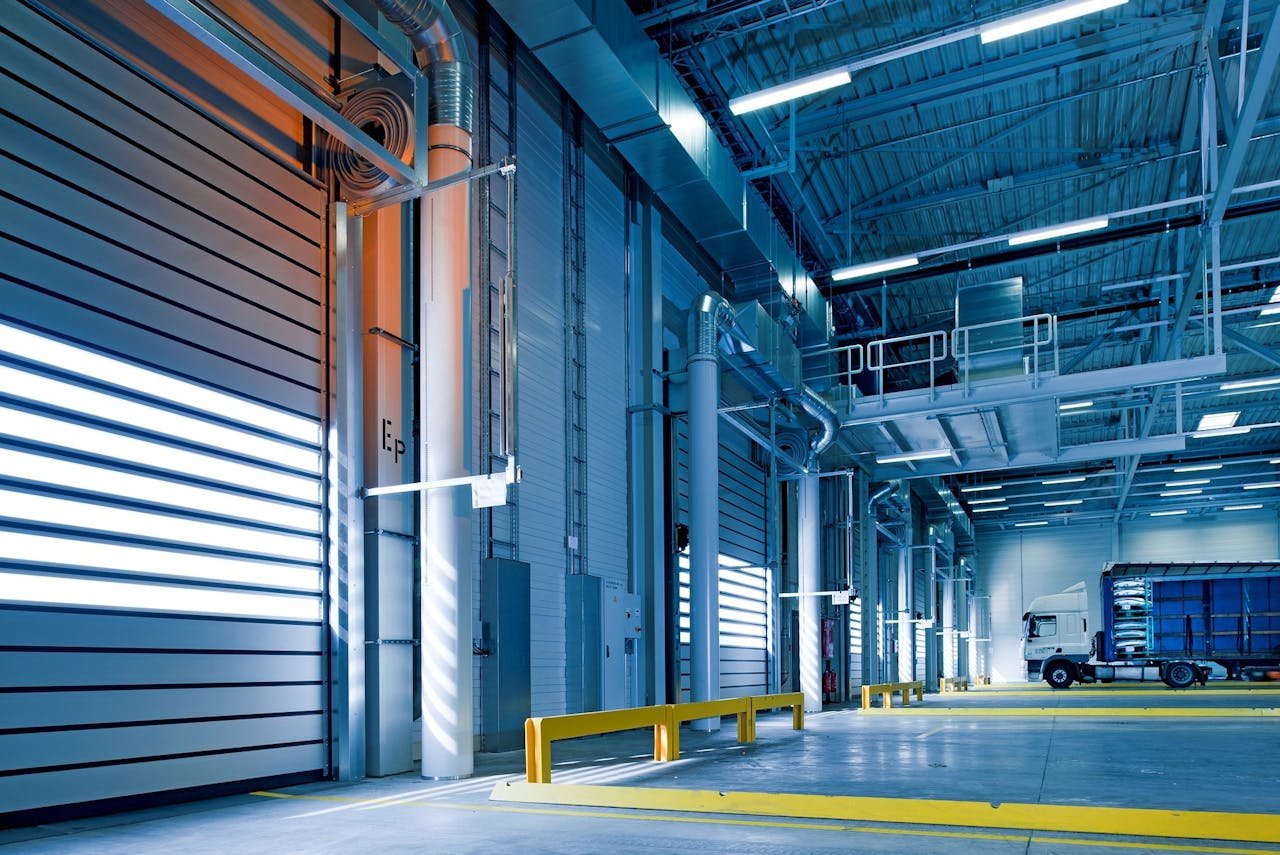
Available properties throughout Southern California feature modern specifications tailored to logistics efficiency. Many Class A buildings offer 32- to 40-foot clear heights, ESFR sprinkler systems, dock-high loading, large secured truck courts, ample trailer storage, and proximity to major transportation corridors including the 5, 10, 15, 60, 91, 215, and 405 freeways.
For companies operating in e-commerce, third-party logistics, light manufacturing, food processing, or import/export distribution, leasing provides operational agility without long-term ownership risk.
Sublease availability has also increased in select submarkets, offering cost-conscious tenants the potential to secure space below prevailing market rents. For businesses evaluating near-term growth or temporary expansion, leasing offers the flexibility to scale operations in response to economic cycles and demand fluctuations.
At the same time, purchasing industrial property in Southern California remains strategically compelling for long-term occupiers. Sale pricing has stabilized following cap rate adjustments over recent quarters, bringing improved underwriting clarity to acquisitions. While borrowing costs remain elevated relative to historic lows, pricing transparency allows owner-users to evaluate long-term capital deployment with greater confidence.
Ownership offers distinct advantages. Companies gain control over facility modifications, eliminate exposure to future rent escalation, and strengthen their balance sheets through asset accumulation. In a supply-constrained region where entitled industrial land is limited and development timelines are complex, long-term appreciation potential remains intact. For businesses with operational horizons of five to ten years or more, ownership can provide both financial stability and strategic permanence.
Southern California’s competitive advantage extends beyond individual buildings. The region connects Asia-Pacific trade routes directly to one of the largest consumer populations in the country. Intermodal rail yards, international airports, deepwater ports, and extensive freeway networks create unparalleled distribution efficiency. These logistical advantages are difficult to replicate in secondary markets, reinforcing Southern California’s long-term relevance in global supply chains.
Population density, port throughput, and entrenched industrial clusters continue to drive demand. Even as short-term rent growth moderates, the structural fundamentals remain strong. Businesses seeking proximity to customers, suppliers, and transportation infrastructure consistently prioritize this region due to its speed-to-market advantages.
In conclusion, the current Southern California industrial market represents a strategic window for occupiers. Leasing provides flexibility, negotiating leverage, and capital preservation in a stabilizing environment. Purchasing offers long-term control, balance sheet strength, and participation in one of the most irreplaceable industrial corridors in North America. Companies evaluating expansion, relocation, or consolidation should strongly consider Southern California not simply as a regional option, but as a foundational component of long-term operational strategy.